Picture this. You finally decide to make a trip to the grocery store after hours of watching Netflix in bed. Walking around, you reach your favourite aisle – the candy and chips aisle. You grab some potato chips here, chocolate bars there, and wait, you can’t forget the gummy worms! But, what about dinner? Luckily this grocery store has fresh cooked foods. You set your sight on a fatty steak fried in oils and butter with a side of seasoned potatoes – extra salt! You leave the grocery store itching to get home and make it for the 7pm airing of The Bachelorette.
Although this sounds like a harmless day of rest and grocery shopping, sticking to this lifestyle can dangerously increase your risk of stroke! Hear me out…
As of today, stroke is the third leading cause of death, and the leading cause of disability, in North America [5]. Of the survivors, half go on to experience a long-term disability or difficulties with cognitive processes. What if I told you that researchers think 80% of strokes are preventable [5]? From daily lifestyle changes to medical attention, you can take control over your health to prevent the incident of stroke. Whether you are at risk or not, have already had a stroke, or experience a potential cause for stroke, this article will provide you the building blocks for stroke prevention.
Studies show that poor lifestyle choices contribute to 50% of strokes [7]. Five major factors are worth considering when making lifestyle changes: a body mass index of less than 25kg/m2, more than 30 minutes/day of moderate physical activity, no smoking, moderate alcohol consumption, and healthy diet changes [5]. Everyone is unique, which makes it difficult to picture what a healthy body mass index may look like. To get an idea, you can look at some body mass index charts online, and then go even further by asking your doctor what a healthy weight might look like for you. One way to achieve a healthy weight along with healthy blood vessels is via physical activity. Researchers recommend more than 30 minutes/day of exercise that makes you lose your breath. Additionally, smoking increases blood pressure, which then increases the risk of stroke. As such, quitting smoking is the way to go.
A common belief about healthy diets is that one should eliminate carbs and substitute them for high fat foods. This is not the solution! The goal is to find a personalized, balanced diet that works for you by including healthy foods and excluding unhealthy foods. Many foods increase the risk of high cholesterol, obesity, hypertension (high blood pressure), and diabetes – all of which increase the risk of stroke! When looking at nutrition labels for your go-to snacks and foods, you should consider the amount of trans fats, saturated fats, sugars, sodium, and cholesterol. Aim for low to moderate amounts of such nutrients, where 5% daily value is low and 20% daily value is high. Specific foods to avoid include egg yolks, deep fried foods, red meats, sweets, and sugar-containing beverages [7]. Although alcohol was, and still is, a controversial topic in the field of health, most researchers claim that alcohol intake should remain at moderate levels. A moderate level for women is approximately 9 standard drinks per week, while men should not exceed 14 [7].
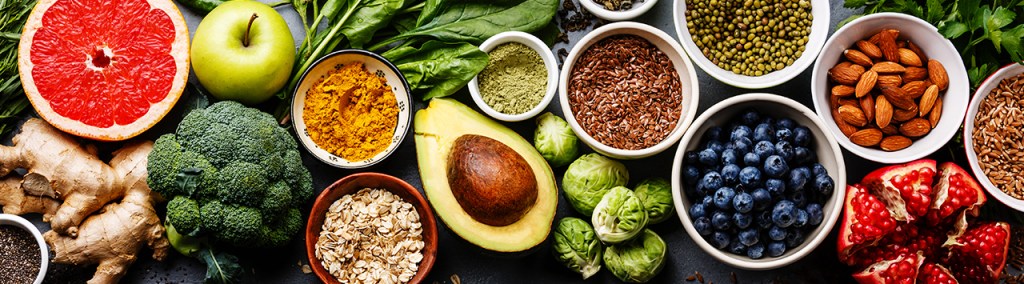
On the other hand, many foods decrease the risk of strokes. Remember the saying, “an apple a day keeps the doctor away”? One study found apples and pears as the largest fruit contributors to stroke prevention. The results indicated a 9% decrease in risk of stroke with every additional 25 grams/day of apples or pears [7]. On that note, one should generally consume 4 to 5 cups of fruits and vegetables daily. Also, low-fat dairy (low-fat yogurt, cottage cheese, fat free milk) and fiber-rich foods (lentils, beans, broccoli, berries, avocados, whole grains, apples, nuts) significantly lower the risk of stroke. Although you may exclude red meat from your diet, fish and chicken are great and healthy substitutes, especially when cooked with healthy fats like olive oil or canola oil. Similarly, you can avoid egg yolks and substitute them with egg whites. Interestingly, some research studies show that coffee (both caffeinated and decaffeinated) and green tea also reduce the risk of stroke [7]
Although lifestyle choices have a large impact on stroke prevention, some health conditions require medical treatments alongside lifestyle changes to reduce the risk of stroke. You can begin with familiarizing yourself with your family and relatives’ medical history. If stroke (or conditions increasing the risk of stroke) runs in the family, you may be at higher risk for stroke. In this case, a visit to the doctor for a risk assessment will be helpful and informative.
A few conditions that increase the risk of stroke include (but are not limited to) hypertension (high blood pressure), high cholesterol, diabetes, atrial fibrillation, and intracranial stenosis. For hypertension, there are five classes of drugs that help decrease blood pressure, thus decreasing the risk of stroke. Such drugs may remove extra fluid and salt from the blood or decrease heart rate. Normal blood pressure levels are at 120 mmHg systolic blood pressure and 80 mmHg diastolic blood pressure. When an individual’s blood pressure is well above these numbers, prescription drugs will help bring the numbers down. For every 10-12 mmHg decrease in systolic blood pressure, and 5-6 mmHg in diastolic blood pressure, stroke risk reduces by 38%[4]. You can also reduce high cholesterol by implementing lifestyle changes and taking a class of drugs called statins. Statins work by stopping the liver from making more cholesterol, thus decreasing the cholesterol concentration in the blood, and reducing the risk of stroke [4]. Since diabetes increases the risk of stroke, it is very important to constantly monitor blood sugar levels, and consistently maintain necessary treatments for diabetes (e.g., insulin injection, medications). Furthermore, atrial fibrillation serves another risk factor for stroke. Atrial fibrillation is when the heart beats irregularly, which can cause clots in the blood. Some symptoms to look out for include shortness of breath, an abnormal heartbeat, or feeling like your heart is pounding in your neck and throat. In this case, doctors may prescribe blood thinners or suggest that you take Advil every day to reduce the risk of stroke [4]. Lastly, some individuals may have a condition called intracranial stenosis. Intracranial stenosis is the build of a hardened substance called plaque which narrows blood vessels in the head. In this case, individuals may need to undergo surgery to remove the plaque from the blood vessels, which will then decrease the risk of stroke [4].
Importantly, one should familiarize themselves with the warning signs of a stroke so that actions for prevention and treatment precede further brain damage. Various symptoms indicate the potential incidence of stroke. The common acronym, F-A-S-T, provides an easy way to remember and identify the various warning signs. F stands for facial drooping, especially on one side of the body. A stands for arm weakness (also applicable to the body and legs) on one side of the body. S stands for speech difficulty, where the individual has a hard time speaking or understanding others speaking. Lastly, T stands for time (to call 911), as the individual may experience a stroke. The quicker you take action, the better the outcome!
There may be moments that, although we take all preventative measures, strokes will still occur. The actions you take before, during, and after a stroke, whether it be for yourself or someone near you, can completely change the outcome. As mentioned at the beginning of this article, stroke is the third leading cause of death, and the leading cause of disability, in North America [5]. If you cannot prevent a stroke, you can still try to prevent death or disability caused by stroke. It is extremely important to receive treatment immediately after a stroke to prevent serious brain damage or even death. Within 3 hours of the stroke, hospitals can administer a medicine that will dissolve the blood clot causing the stroke [7]. Additionally, within 48 hours of the stroke Aspirin can also limit the damage. However, only a medical professional should decide to administer Aspirin. This is because strokes have different causes, and Aspirin can either be good or bad depending on the stroke’s cause. Lastly, stroke care and after-care in the hospital is of upmost importance [7]. If you suspect somebody is having a stroke, do not hesitate, and call 9-1-1! It could be a matter of life, death, or life with disability.
Many stroke prevention strategies are readily available from your very own home. Educate yourself and others on the warning signs and risks of stroke, take charge of your lifestyle choices, and seek medical attention for potential stroke-causing conditions. It is never too late to put your foot down and help decrease the prevalence of stroke. Go save a life!
Author: Mauda Karram
Resources
1. Boehme, C., Toell, T., Mayer, L., Domig, L., Pechlaner, R., Willeit, K., Tschiderer, L., Seekircher, L., Willeit, P., Greismacher, A., Knoflach, M., Willeit, J., Kiechl, S. (2019) The dimension of preventable stroke in a large representative patient cohort. Neurology, 93(23). Doi: https://doi.org/10.1212/WNL.0000000000008573
Link: https://n.neurology.org/content/93/23/e2121.abstract
2. Fisher, M., Moores, L., Alsharif, M.N. (2016) Definition and implications of the preventable stroke. JAMA Neurology, 73(2), 186-189. doi:10.1001/jamaneurol.2015.3587
Link: https://jamanetwork.com/journals/jamaneurology/article-abstract/2474503
3. Gorelick, P.B. (1995) Stroke Prevention. JAMA Neurology, 52(4), 347-355. doi:10.1001/archneur.1995.00540280029015
4. Hankey, G.J. (2005) Preventable stroke and stroke prevention. Journal of Thrombosis and Haemostasis, 3(8), 1638-1645. https://doi.org/10.1111/j.1538-7836.2005.01427.x
Link: https://onlinelibrary.wiley.com/doi/full/10.1111/j.1538-7836.2005.01427.x
5. March, J.D., Keyrouz, S.G. (2010) Stroke prevention and treatment. Journal of the American College of Cardiology, 56(9), 683-691.
Link: https://www.jacc.org/doi/full/10.1016/j.jacc.2009.12.072
6. Nicol, M.B., Thrift, A.G. (2005) Knowledge of risk factors and warning signs of stroke. Vascular Health and Risk Management, 1(2), 137-147. doi: 10.2147/vhrm.1.2.137.64085
Link: https://www.ncbi.nlm.nih.gov/pmc/articles/PMC1993942/
7. Spence, J.D. (2018) Diet for stroke prevention. Stroke and Vascular Neurology 3(2). doi: 10.1136/svn-2017-000130
Link: https://svn.bmj.com/content/3/2/44.abstract
8. Wersching, H. (2011) An apple a day keeps stroke away? Stroke, 42(11), 3001-3002. https://doi.org/10.1161/STROKEAHA.111.626754
Link: https://www.ahajournals.org/doi/full/10.1161/STROKEAHA.111.626754
 JP Stroke Foundation
Leave a comment