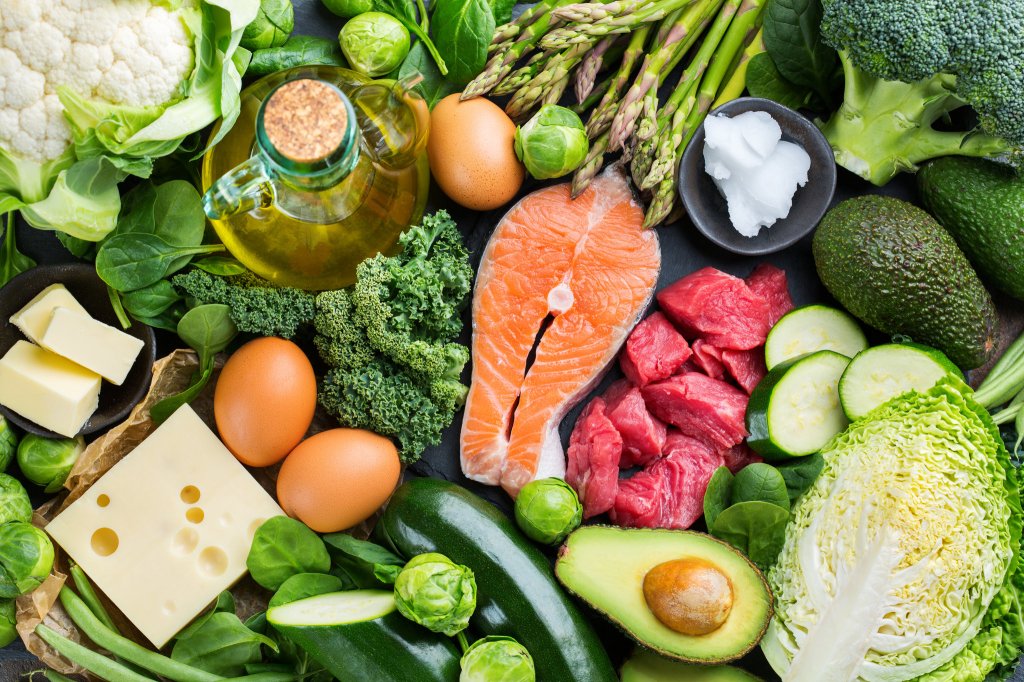
We’ve all been on TikTok and at least once, have seen that woman eating insane Keto based meals. For those of you who don’t know who I’m referring to, meet Janelle Rohner. Her lunches and snacks have ranged from bell-pepper sandwiches to meats and cheeses. They’re often ridiculed by how insane they look but you’d be surprised to see that many individuals start the Keto Diet after researching the physical outcomes of it. The popular keto diet is a high fat, adequate protein, and low carbohydrate diet designed to stimulate the metabolic process of Ketosis, a process where the body burns fat through an alternate source of energy [1]. So, instead of our typical source of energy, carbohydrates, your daily intake would include mainly fats and proteins. In fact, a lot of dieticians and nutritionists have deduced this diet to be effective in the realm of weight loss [2]. See how this grabs the attention of the youth? Kendall Jenner, Gigi Hadid, Chris Hemsworth, Ryan Reynolds… basically anyone with an amazing body. I could go on. In today’s day and age, not only is social media, especially TikTok, taking over the minds of GenZ, but it’s the role models and influencers promoting certain ideals and body images. Getting that perfect hourglass figure or six-pack is the ultimate goal. This mindset has its pros; I’m all here for a healthy lifestyle. After all, it does its job. However, if we shift our perspective from weight loss and focus more on the realm of cardiothoracic health, you may be surprised. It’s interesting to see how often our heart’s health can be disregarded when it comes to nutrition. When you change your diet, it’s important to see how it can affect our hearts. These effects can be understood through the cardiovascular disease (CVD) risk scores.
CVD is common in the general population but is seen primarily in seniors (60 years and older) [3]. Making small changes and adjustments in your diet and lifestyle in your early 20’s can lead to permanent changes later in life. As a diagnostic category, CVD includes coronary heart disease, cerebrovascular disease, peripheral artery disease, and aortic atherosclerosis [3]. With the CVD risk assessment tool, doctors begin testing for patients at age 20 and look for specific risk factors. Additionally, factors including history, physical examinations, lipid concentration, and cholesterol levels are assessed [3]. After identifying any risk factors, fat and cholesterol levels, a 10-year CVD estimation is calculated [3]. Why assess CVD risk? Even though there are asymptomatic patients aged 20-39, individuals with low or very low 10-year CVD risk can be reassured and in fact, encouraged to maintain a healthy lifestyle [3]. Nonetheless, the habit of regular exercise, healthy diet and control reinforces consistency. Additionally, if you decide to make any changes to your diet, such as keto, assessing your 10-year CVD risk at a younger age will help the doctor give you professional feedback. After determining BMI scores or risk of obesity, your physician may recommend another diet for healthy weight loss. Keep in mind, assessing obesity or any eating disorder is one of the prime risk identification factors during the CVD risk assessment [3].
Now, say you’ve completed your CVD risk assessment score and receive the okay from your doctor to start the keto diet for weight loss. As a science student, my opinion on the keto diet is as follows; I appreciate people’s interest in such nutritional trends to maintain a healthy lifestyle. After all, experts say that in order to lose weight in a healthy way, results are based on 80% diet, and 20% exercise. However, although diets, such as keto, are trendy and people are inspired to follow them, here’s one thing people often disregard: diets that are temporary are harder to maintain, thus making the overall weight loss journey more difficult. In the span of 2 months, I was able to lose 10 pounds and I barely went on a diet. I made small adjustments to my lifestyle. Food is a part of your identity and lifestyle; it’s difficult to change a part of who you are for the perceived “ideal body”. Healthy weight loss takes time, meaning patience is everything. Seeing the physical outcomes of keto diets on social media, leads to the preconceived notion that the diet’s outcome is universal. In reality, everyone’s body is different and an individual’s health background is disregarded. Additionally, there is a lot of bias regarding these nutritional trends. It’s important to make informed decisions based on data, facts and the available science.
For your heart health, there are many upsides to maintaining a keto-diet lifestyle. Several studies showed that the keto diet improved “good” cholesterol levels and through adequate control of blood, even reversed type-2 diabetes [4]. Cholesterol levels and diabetes are factors doctors take into consideration during the CVD risk assessment [4].
On the other hand, research also suggests that there are negative links between the keto-diet and cardiovascular health. The keto-diet includes a lot of fats to substitute carbohydrates for energy production. However, not all fats are good fats. I know, I wish life was that easy. The saturated fats are the bad guys here. So, oils and fats in a lot of fast-food meals and red meat increase the probability of inheriting atherosclerosis [4]. The by-product? Increased risk of heart attacks and coronary disease. So, what are the good fats? Monounsaturated fats and polyunsaturated fats should be incorporated in your keto-diet; this includes foods such as eggs, fish, and nuts. Additionally, keto-diets increase the probability of higher LDL cholesterol levels (otherwise known as “bad” cholesterol), thus increasing your risk of CVD in the future [4]. LDL cholesterol is examined during step 2 of the patient’s fat and cholesterol profile during the 10-year CVD risk assessment test [3]. Now, here’s why the CVD risk assessment can be useful. Increased levels of LDL cholesterol, especially in youth, are not extremely concerning for your cardiovascular health. It’s the prolonged increase in LDL cholesterol levels over months and years that cause health issues in the future. Associate professor of clinical medicine at Penn Medicine, Neel Chokshi, stated that this increased pattern of persistence is what’s more concerning [4].
I go on TikTok A LOT. I don’t know how to cook at all but I do enjoy learning new recipes from the app. One takeaway from “food TikTok” is that carbohydrates have gotten a bad reputation. Content creators often make meals with carbohydrate alternatives to promote a healthier lifestyle. However, Chokshi states, “But we are learning that processed food and processed carbs are the real culprit here” [4].
So, when starting a new diet… or in this case, a change in your lifestyle in an orderly and healthy manner, it’s one step closer to feeling better about yourself. However, you must not be fooled by generic advice provided by normal people on social media. Our bodies are different, our internal health and history varies, and the lifestyles we previously lived are not the same. It’s important to take these factors into consideration in order to make your keto diet more customizable and appropriate. With dieting culture and bad habits, people often get rid of one bad habit, only to replace it with another. So yes, perhaps keto diets can help with weight loss and make you look like the next Gigi Hadid of your friend group (although extremely unlikely). But, looking at which fats you consume, how high your fat intake will be, levels of physical activity and your medical background are not only healthier and safer, but make your health journey a lot easier.
Well folks, that’s it from my end. I hope this article can give you a little more insight into the relationship between a keto diet and cardiovascular health. The correlation between cardiovascular health and diet is often disregarded. Just from analyzing the CVD risk assessment, we can see how the factors included in this assessment should be monitored and maintained at adequate levels. However, with more knowledge, you’d be surprised to learn that healthy lifestyle changes can be made. It’s pretty evident that I am an advocate for healthier lifestyle changes that are right for you… not generic diets that are difficult to maintain. To those of you planning on trying the keto diet, good luck! Here’s some food for thought (pun-intended): how we form our routines around these diet changes with proper maintenance, consistency, and patience is what leads to positive and healthy changes in weight and even our mental well-being.
Author: Sumairaa Ahmed
References
- Mawer, R. (2020, October 22). The ketogenic diet: A detailed beginner’s guide to keto. Healthline. https://www.healthline.com/nutrition/ketogenic-diet-101.
- Diet review: Ketogenic diet for weight loss. The Nutrition Source. (2019, May 22). https://www.hsph.harvard.edu/nutritionsource/healthy-weight/diet-reviews/ketogenic-diet/.
- Uptodate. (n.d.). https://www.uptodate.com/contents/cardiovascular-disease-risk-assessment-for-primary-prevention-in-adults-our-approach.
- Graff, S. (2019, April 11). A cardiologist’s take on the keto diet – penn medicine. A Cardiologist’s Take on the Keto Diet – Penn Medicine. https://www.pennmedicine.org/news/news-blog/2019/april/a-cardiologists-take-on-the-keto-diet.
 JP Stroke Foundation
Leave a comment