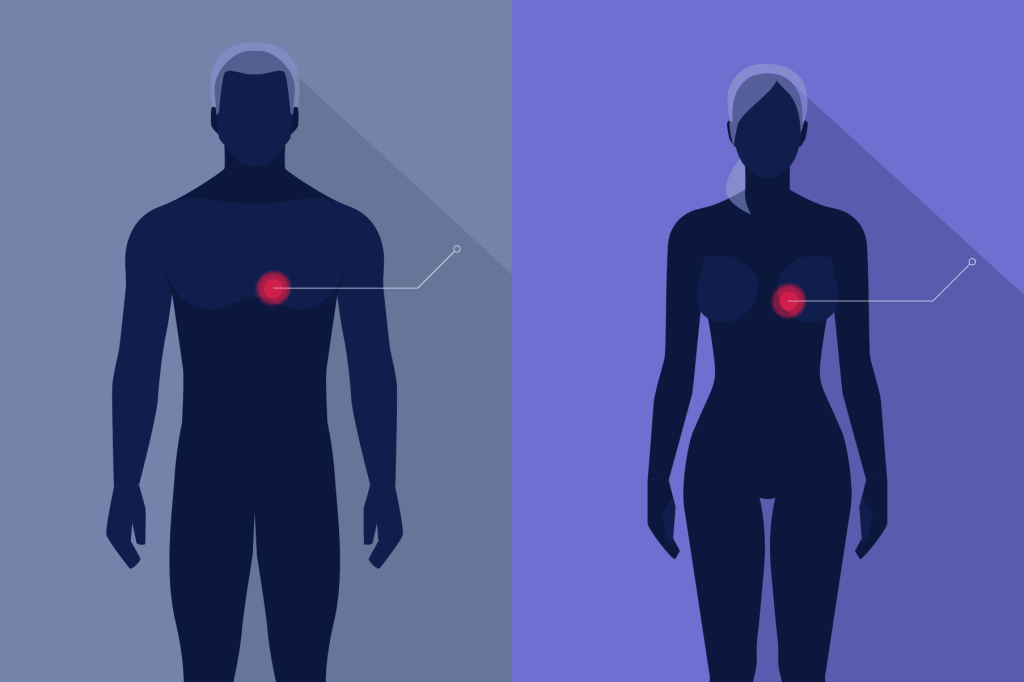
Maintaining good heart health is important for both men and women and helps lower the chances of having a heart attack, stroke or early death. The chance of having heart failure increases when you get older and knowing the risk factors for both men and women can help lower heart disease and failure rates [1].
One of the dangers of heart health is generalizing signs and symptoms as equal in men and women. In fact, there are biological differences that can result in physically different manifestations of disease. Men tend to have a higher chance of experiencing heart diseases compared to women, and the typical signs for men are: chest pain, pain in the left arm, and pain in the jaw. Women typically show different symptoms such as nausea, dizziness, or they may not show any signs which is why it is very important for resources to be specific to men and women [3]. Focusing on the gender and sex differences of heart health is needed for correct prevention, diagnosis and treatment.
Another important biological difference is related to gender and age. When women reach the age of menopause (approximately 50 years old), they have a much higher chance of having heart disease [1]. During menopause, estrogen levels decrease in women. Research has shown that estrogen is important, protective and lowers the chance of developing heart disease. Now you can imagine, this sudden drop of estrogen at menopause leaves women at a higher risk for heart disease.
In addition, science and research has shown that heart muscle and tissues in females is less likely to weaken or die after a heart attack compared to males. Young males are more likely to have inflammation in their heart [3]. Inflammation can be caused by stress, viruses, an unhealthy diet, genetics and more [2].
J.P. Stroke Foundation’s main goal is to continue educating as many people as possible to prevent heart disease. Education and accessible content about heart health can change lives. This post aims to explain how gender and sex differences must be known to diagnose patients correctly and prevent complications.
Author: Noor Junaid
[1] Gaggin, H., & Oseran, A. (2020, July 16). Gender differences in cardiovascular disease: Women are less likely to be prescribed certain heart medications – Harvard Health. Retrieved
July 30, 2021, from Harvard Health website: https://www.health.harvard.edu/blog/gender-differences-in-cardiovascular-disease-women-are-less-likely-to-be-prescribed-certain-heart-medications-2020071620553
[2] Lu, L., Sun, R., Liu, M., Zheng, Y., & Zhang, P. (2015). The Inflammatory Heart Diseases: Causes, Symptoms, and Treatments. Cell Biochemistry and Biophysics, 72(3), 851–855. https://doi.org/10.1007/s12013-015-0550-7
[3] Regitz-Zagrosek, V. (2020). Sex and Gender Differences in Heart Failure. International Journal of Heart Failure, 2(3), 157. https://doi.org/10.36628/ijhf.2020.0004
 JP Stroke Foundation
Leave a comment