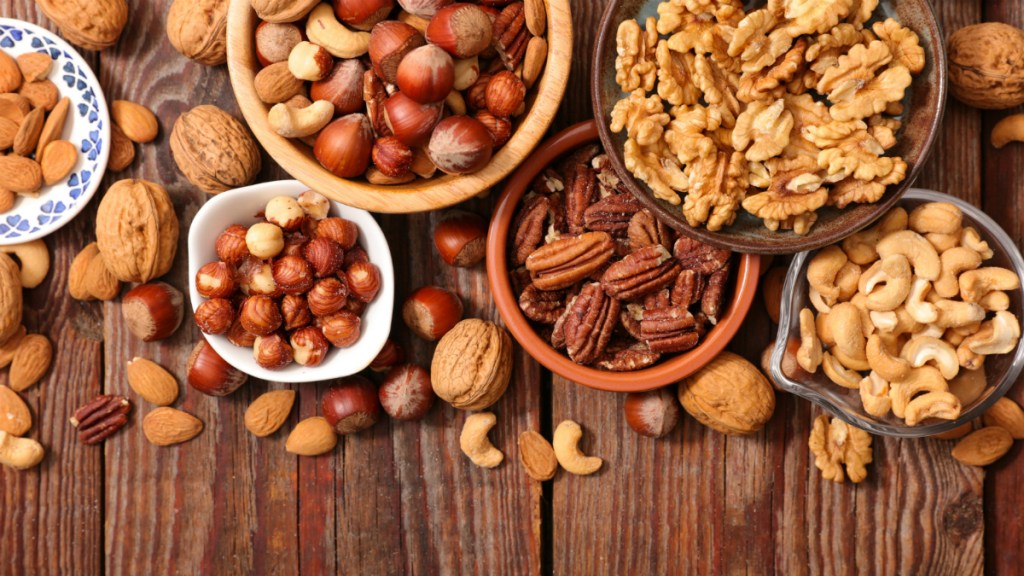
What if I told you that the fight against cardiovascular diseases continues every time you have something to eat? Different foods contain dietary nutrients capable of preventing disease. In particular, nuts seem to confer protection against the development of heart disease.
Nuts are proof that a healthy diet can take you a long way! Tree nut consumption is strongly associated with lower BMI (body mass index), waist size, and reduced weight gain. Consuming nuts not only correlates with a healthy body but also considerably reduces the risk of obesity, dyslipidemia (unhealthy blood fat levels), elevated blood pressure, and impaired blood vessel function. Since these are all risk factors for cardiovascular diseases, nut intake can hit multiple birds with one stone.
Nuts are rich in nutrients that provide us with cardioprotective properties. From unsaturated fatty acids, proteins, fibres, and plant sterols to minerals such as potassium, magnesium, antioxidants, and vitamins, nuts are loaded healthy components. It is important, however, to know that not all nuts have the same nutritional benefits. Tree nuts, particularly walnuts, almonds, and pistachios are considered healthier than ground nuts such as peanuts. Walnuts are high in alpha linolenic acid, which is thought to decrease the risk of heart disease by maintaining normal heart rhythm and pumping. Almonds possess a rich assortment of nutrients like potassium, healthy fats, magnesium, and vitamin E. Finally, pistachios have a low fat and caloric content, and contain the highest level of unsaturated fatty acids, which help lower cholesterol levels.
Oxidative stress plays a central role in the development and progression of cardiovascular disease. It originates from an imbalance in reactive oxygen species (highly reactive chemicals) and antioxidants. Once reactive oxygen species concentrations become too great for antioxidants to control, they stimulate multiple different pathways that can either be beneficial or damaging to the cell (1). Thankfully, nuts carry compounds which have antioxidant properties capable of changing vascular function by reducing inflammation of blood vessels and appropriately regulating cell death. Ultimately, this reduces risk for cardiovascular diseases.
Nuts are also a great source of energy! 80% of the energy comes in the form of fat and, fortunately for us, these are the healthy types of fats! Nuts are low on saturated fat and contain no trans fat. Healthy fats provide beneficial effects on inflammation, improve blood cholesterol, and blood pressure which are all risk factors of cardiovascular diseases. On top of being healthy, nuts are likely to replace other unhealthy foods in your diet. By replacing your daily bag of chips or trip to the ice cream shop with a serving of nuts, you reduce your blood glucose level which simultaneously reduces your chance of cardiovascular disease.
Not only is this great news, but it’s supported with a lot of evidence! Multiple studies have examined the effects of nuts on all-cause mortality (death from any cause) and fatal/non-fatal cardiovascular disease. They all reported that high amounts of nuts consumed can significantly lower all-cause, cardiovascular, ischemic, and coronary heart disease mortality rates. They identified that the optimal number of servings per week was 4. Even better, several studies also found that every additional serving of nuts consumed per day reduces all-cause and cardiovascular diseases mortality. However, beware! If you’re already consuming nuts at a very low rate, you won’t get the desired protection if you increase your nut consumption by only one serving per week (2)!
Some of you may be wondering if all of this also applies for roasted and salted nuts. In the case of roasted hazelnuts, they lose approximately 15% of their vitamin E but still retain their ability to protect against cardiovascular disease. One study also observed no differences in cardioprotective properties between the salted nut and unsalted. However, these results cannot be generalized to products on the market since many exceed the sodium content used in this study, by more than 4 times. Be aware of the sodium content in nuts because high levels of sodium may counteract the potential health benefits.
Author: Jean Paul Sabat
References
- Cervantes Gracia, K., Llanas-Cornejo, D., & Husi, H. (2017). CVD and oxidative stress. Journal of clinical medicine, 6(2), 22. https://doi.org/10.3390/jcm6020022
- Coates, A., Hill, A. & Tan, S. (2018). Nuts and cardiovascular disease prevention. Curr Atheroscler Rep 20, 48. https://doi.org/10.1007/s11883-018-0749-3
- Guasch-Ferré, M., Hernández-Alonso, P., Drouin-Chartier, J-P., Ruiz-Canela, M., Razquin, C., Toledo, E., Li, J., Dennis, C., Wittenbecher, C., Corella, D., Estruch, R., Fitó, M., Ros, E., Babio, N., Bhupathiraju, N. S., Clish, B. C., Liang, L., Martínez-González, A. M., Hu, F. B., Salas-Salvadó, J. (2021). Walnut consumption, plasma metabolomics, and risk of type 2 diabetes and cardiovascular disease, The Journal of Nutrition, 151(2), 303–311. https://doi-org.libaccess.lib.mcmaster.ca/10.1093/jn/nxaa374
- JoanSabaté, J. & Bitok, E. (2018). Nuts and cardiovascular disease. Progress in Cardiovascular Diseases 61(1), 33-37. https://doi.org/10.1016/j.pcad.2018.05.003
- Liu, X., Guasch-Ferre, M., Drouin-Chartier, J-P., Tobias, N. D., Bhupathiraju, N. S., Rexrode, M. K., Willett, C. W., Sun, Q. & Li, Y. (2020). Changes in nut consumption and subsequent cardiovascular disease risk among US men and women: 3 large prospective cohort studies. Journal of the American Heart Association 9(7). https://doi.org/10.1161/JAHA.119.013877
- Tey, S.L., Robinson, T., Gray, A.R. et al. (2017). Do dry roasting, lightly salting nuts affect their cardioprotective properties and acceptability? Eur J Nutr 56, 1025–1036. https://doi.org/10.1007/s00394-015-1150-4
 JP Stroke Foundation
Leave a comment