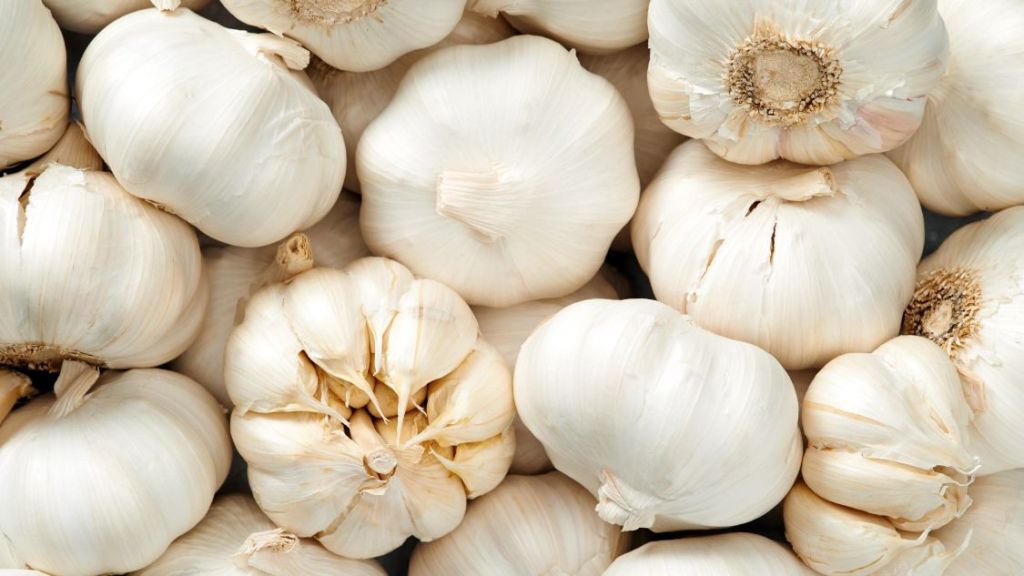
Would you choose to smell a little worse to feel a lot better?
The smell question is quite legitimate. Several studies show that eating garlic significantly increases the amount of hydrogen sulfide secreted by our bodies. Hydrogen sulfide is the same harmful byproduct of petroleum refining that smells like rotten eggs [1]. Yes, in higher concentrations it is poisonous. In lower ones – it knocks you out with its smell. But our bodies store hydrogen sulfide for their own use – first, to fight free radicals, and second, to give cells chemical signals that cause blood vessels to relax and increase blood flow [1]. Just by adding a small amount of garlic juice extract to human red blood cells, the cells immediately start emitting hydrogen sulfide. And if it stinks, that means it’s already healing – removing pathogens and providing good circulation. Garlic is low in calories, rich in vitamins C and B6, selenium and manganese [1].
NOTE: People with blood clotting disorders and those taking blood-thinning medications should consult their doctor about the amount of garlic allowed in their diet [3].
12 reasons why eating raw garlic will benefit you:
1. Lowers the level of cholesterol
Meta-analyses performed at Oxford University (comparison of nearly two dozen different studies) and at the University of Exeter (13 clinical trials) leave no doubt in this regard. In bad news: meta-analyses show that eating garlic has no effect on triglycerides, another important factor in heart disease [3].
2. Lowers blood pressure
The deadly component of garlic, diallyl disulfide sulfoxide, dilates blood vessels. Impressively, a study conducted found that a dose of 600-1500 mg of garlic was as effective in lowering blood pressure as a popular drug used to treat hypertension, ischemic heart disease, cardiac arrhythmias, acute myocardial infarction and secondary prevention of heart attack [2].
3. Has antibiotic properties
During the war, with the shortage of medicines, crushed garlic was put on hard-to-heal wounds. In addition, ajoene found in garlic disrupts the chemical communication between bacteria and prevents them from forming a so-called biofilm, a structure produced by bacteria to protect themselves from adverse environmental conditions, such as antibiotic exposure [3].
4. Treats drug-resistant urinary tract infections
Garlic is an alternative to pharmacological interventions send garlic and provides benefits when antibiotics no longer work (possibly due to antibiotic resistance). Researchers at the G.D. Birla Institute of Technology and Science in India found that 93 percent of 166 bacterial strains isolated from the urine of patients with urinary tract infections appeared to be resistant to most antibiotics used. At the same time, 82 percent of these drug-resistant bacteria were killed when treated with an aqueous extract of garlic [3].
5. Boosts immunity
It is no coincidence that Eastern medicine uses garlic to treat almost all ailments, including the flu and common cold. Garlic contains a lot of vitamin B6, which is necessary for the immune system to function properly and allow for new cells to grow efficiently [5]. A large study conducted in the UK showed that enriching meals with a three-gram addition of chopped garlic resulted in a 63 percent reduction in the incidence of flu and colds [6].
But beware: garlic is hard to digest, so individuals plagued by high fever are recommended to avoid consuming high amounts of garlic because it may burden the liver. Instead of eating the garlic, it is better to rub and inhale it. This will help remove germs from the mucous membranes and respiratory tract.
6. Prevents further heart attacks
Garlic has been shown to reduce the effects of ischemia (restricted blood flow and oxygen in the body). Researchers at New York’s Albert Einstein College of Medicine found that injecting mice with hydrogen sulfide completely protected their hearts from any permanent damage caused by heart attacks [2].
7. In people with diabetes, it prevents cardiomyopathies (heart muscle disorders).
It also lowers high blood sugar levels, which means it reduces the risk of diabetic complications. Doctors have identified nearly 20 different components of garlic juice that benefit heart muscle health [5].
8. Reduces cancer risk
Research from the U.S. National Cancer Institute suggests that 10 grams of chopped garlic or shallot onions per day reduces the risk of developing prostate cancer. Analyses done at Case Western Reserve University found that garlic can reduce the incidence of polyps in the colon [7].
9. Protects against bloodsuckers
Not, of course, the legendary vampires, but quite ordinary mosquitoes and ticks. Blood-sucking insects do not like sulfur compounds. A few years ago, a preparation of garlic juice and oil was sprayed on vast areas around Modena, Italy. This freed residents from the plague of mosquitoes and ticks (garlic extract inhibits the development of larvae and kills adult insects) and has since provided an extraordinary scent experience for walkers in the surrounding parks [2].
10. Increases the birth weight of newborns
New mothers are often recommended to incorporate garlic in their diet. Longstanding traditions state that the rule is simple: If you want the baby to be born big – scare the family and neighbours with garlic breath [8].
11. Can prevent the development of Alzheimer’s Disease
Garlic contains a lot of antioxidants, which protect the cells of the nervous system from damage. It also dilates blood vessels, so it allows for more blood to travel to the brain. In addition, it also lowers cholesterol levels. All these three factors – hypertension (high blood pressure), high cholesterol and oxidative stress increase the risk of developing dementia. By reducing these risk factors, garlic offers protective effects against cognitive decline [4].
12. Enhances physical performance
In ancient Greece, garlic was given to athletes before the Olympic games. Although there are no systematic studies on the effect of garlic “boosting” sports performance in humans, it has been scientifically confirmed in mice and rats. Indian doctors report increased performance and lowered peak heart rate in heart disease patients who had garlic oil added to their meals. However, American physiologists at Appalachian State University don’t confirm these observations because the cyclists they studied reported no increase in performance after increasing the amount of garlic in their diets [1].
How to eat garlic?
To obtain the most health benefits from garlic, experts recommend eating it raw. Heat treatment destroys the most valuable components of garlic. On the other hand, crushing and chopping tears the cell membranes of the plant and releases alliinase. Alliinase breaks down the odorless alliin, resulting in the formation of strong-smelling allicin, or diallyl disulfide sulfoxide. So, it starts to smell stronger and has a stronger effect, because allicin has antibiotic and anticoagulant properties. After chopping, you have to wait 10-15 minutes before administering it so that the enzymes have time to do their job [5].
Author: Isha Ballgobin
References
- Bongiorno, P., Fratellone, P. & LoGiudice, P. (2008). Potential Health Benefits of Garlic (Allium Sativum): A Narrative Review. Journal of Complementary and Integrative Medicine, 5(1). https://doi.org/10.2202/1553-3840.1084
- Brace, Larry D. PhD Cardiovascular Benefits of Garlic (Allium sativum L), The Journal of Cardiovascular Nursing: July 2002 – Volume 16 – Issue 4 – p 33-49
- Tsai, C.-W., Chen, H.-W., Sheen, L.-Y., & Lii, C.-K. (2012). Garlic: Health benefits and actions. Biomedicine (Taipei), 2(1), 17–29. https://doi.org/10.1016/j.biomed.2011.12.002
- Yoshioka, Y., Matsumura, S., Morimoto, M., Takemoto, Y., Kishi, C., Moriyama, T., & Zaima, N. (2021). Inhibitory Activities of Sulfur Compounds in Garlic Essential Oil against Alzheimer’s Disease-Related Enzymes and Their Distribution in the Mouse Brain. Journal of Agricultural and Food Chemistry, 69(35), 10163–10173. https://doi.org/10.1021/acs.jafc.1c04123
- Ansary, J., Forbes-Hernández, T. Y., Gil, E., Cianciosi, D., Zhang, J., Elexpuru-Zabaleta, M., Simal-Gandara, J., Giampieri, F., & Battino, M. (2020). Potential Health Benefit of Garlic Based on Human Intervention Studies: A Brief Overview. Antioxidants, 9(7), 619–. https://doi.org/10.3390/antiox9070619
- Josling, P. (2001). Preventing the common cold with a garlic supplement: A double-blind, placebo-controlled survey. Advances in Therapy, 18(4), 189–193. https://doi.org/10.1007/BF02850113
- Milner, J. A. (2006). Preclinical perspectives on garlic and cancer. The Journal of Nutrition, 136(3S), 827S–831S. https://doi.org/10.1093/jn/136.3.727S
- Meher, S., Duley, L., & Meher, S. (2006). Garlic for preventing pre‐eclampsia and its complications. Cochrane Library, 2010(2), CD006065–CD006065. https://doi.org/10.1002/14651858.CD006065
 JP Stroke Foundation
Leave a comment