
Have you ever heard of the fight-or-flight response?
Imagine you’re crossing the street and you hear a loud honk coming from an oncoming car. Or, you’re walking into a test which, you believe, might make or break your career. As you can imagine, your body responds in a unique way in scenarios with an actual or perceived threat. In that moment, a hormone called epinephrine (or adrenaline) releases throughout your body, causing an increase in heart rate and blood to flow to your muscles. Sometimes, this hormone can have negative effects on heart health and stroke prevention, particularly for people with health risks for cardiovascular or non-cardiovascular conditions. As such, medications exist to limit epinephrine’s effects on the cardiovascular system – to slow down the heart. One of the most famous medication groups to date, are beta-blockers.

Beta-blockers (BBs), a.k.a beta-adrenergic blocking agents, are revolutionary and very highly studied. They’ve been around for many decades and treat various cardiovascular and non-cardiovascular disorders [3]. Sir James Black designed BBs and, in return, received the Nobel Prize for Physiology or Medicine in 1988 [4]. Sir James Black discovered this medication in the 1960s to treat angina pectoris – a condition where the heart does not receive enough oxygen, causing shortness of breath and discomfort or pain in the chest [1]. This first ever BB, still used to date, is propranolol.
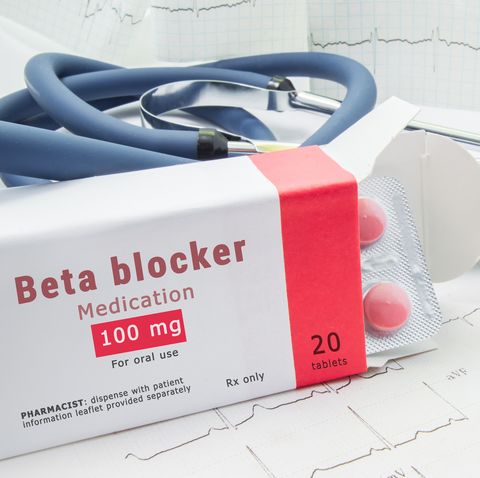
Today, we will consider BBs in the context of heart and stroke. Many types of BBs exist to treat cardiovascular disorders, common ones including propranolol, atenonol, metoprolol, pindolol, bisoprolol, and carvedilol.
BBs block the effects of epinephrine (adrenaline), causing the heart to beat slower and softer. This reduces blood pressure and enlarges veins and arteries to allow for easier and smoother blood flow [2]. These medications can treat various cardiovascular conditions such as heart failure, hypertension (i.e., high blood pressure), arrhythmia (i.e., abnormal heartbeat), and coronary heart disease (i.e., narrowed arteries, reducing blood flow to the heart muscles) [1].
Heart failure has many potential causes. A common heart failure occurs when the heart is unable to pump enough blood out to the rest of the body. For individuals with this condition, BBs like metoprolol, bisoprolol, and carvedilol reduce the risk of death from heart failure [1]. Similarly, for individuals with coronary heart disease, BBs like atenolol and metoprolol show a decrease in long-term mortality [4]. Hypertension, identified as high blood pressure, serves as a health risk for both cardiovascular disease and stroke. BBs, such as propranolol, atenolol, metoprolol, pindolol, are generally used to reduce stroke occurence for those with hypertension. Cardiac arrhythmias, characterized as abnormal heartbeats, are also treated using BBs like metoprolol. BBs slow down heart rate and reduce the number of heartbeats that originate in the wrong part of the heart [4]. They can also slow down the signals to the heart or increase the amount of time between heart beats [4]. Other indirect ways the BBs reduce cardiac arrhythmias include inhibition of excitatory signals (recall epinephrine), reducing any blockage in the coronary artery (arteries that supply the heart), influencing heart signal detection, and reducing physical stress on the heart [4].
There are also potential side effects of BBs. Different types of BBs can have different side effects. BBs can affect individuals differently, depending on their health risks, cardiovascular and non-cardiovascular conditions. A group of researchers suggested that higher doses of BBs may have higher risks of side effects [3]. For individuals with asthma, BBs are generally not prescribed due to concerns of severe asthma attacks [2]. For individuals with diabetes, low blood sugar causes the heart to beat faster. As you can imagine, BBs would make the heart beat slower, blocking this important signal of low blood sugar. Additionally, BBs can also decrease cholesterol levels and increase triglyceride (i.e., fat) levels [2]. These changes are associated with metabolic syndrome, which is a group of symptoms or conditions that can increase the risk of diabetes, obesity, heart disease, and stroke.
For individuals taking other types of medication in addition to BBs, the doctor must know about them to limit any negative interactions between the medications. Some generally observed side effects of BBs include cold hands or feet, fatigue, weight gain, whereas less common ones include depression, shortness of breath, trouble sleeping, and yellow skin [2].
Although researchers have vigorously studied BBs, there remains much more to learn about the effects of BBs on various conditions. As such, you should inform your doctor prior to beginning or terminating the use of BBs, as BBs can have complex interactions with other health conditions or medications taken. Further, another treatment may be more effective for BBs depending on the condition. For example, when it comes to stroke reduction, other medications on the market can do a better job than BBs. Two examples include angiotensin receptor blockers and calcium channel blockers.
Nonetheless, medications like BB show great effectiveness in the treatments of cardiovascular and non-cardiovascular conditions. Although we’ve only explored the effects of BBs on selected cardiovascular conditions, BBs can treat many other conditions, like anxiety, migraines, and tremors. It is imperative to explore the many types of existing treatments in order to make the best choices for your health – make it personal!
Author: Mauda Karram
References
- Martinez-Milla, J., Raposeiras-Roubin, S., Pascual-Figal, D.A., Ibanez, B. (2019). Role of beta-blockers in cardiovascular disease in 2019. Spanish Society of Cardiology, 72(10), 844-852. https://doi.org/10.1016/j.rec.2019.04.014
- Mayo Foundation for Medical Education and Research. (2021, August 13). What you should know about beta blockers. Mayo Clinic. Retrieved December 12, 2021, from https://www.mayoclinic.org/diseases-conditions/high-blood-pressure/in-depth/beta-blockers/art-20044522.
- McAinsh, J. & Cruickshank, J.M. (1990). Beta-blockers and central nervous system side effects. Pharmacology & Therapeutics, 46(2), 163-197. https://doi.org/10.1016/0163-7258(90)90092-G
- Wijkman, M.O. (2018). Beta-blockers, hypertension, and stroke outcomes. J Clin Hypertens, 20: 573-574. https://doi.org/10.1111/jch.13234
- Ubuka, T. (2021). Subchapter 131B – noradeline/adrenaline. Handbook of Hormones (Second Edition), 2, 1041-1044. https://doi.org/10.1016/B978-0-12-820649-2.00290-4
 JP Stroke Foundation
Leave a comment