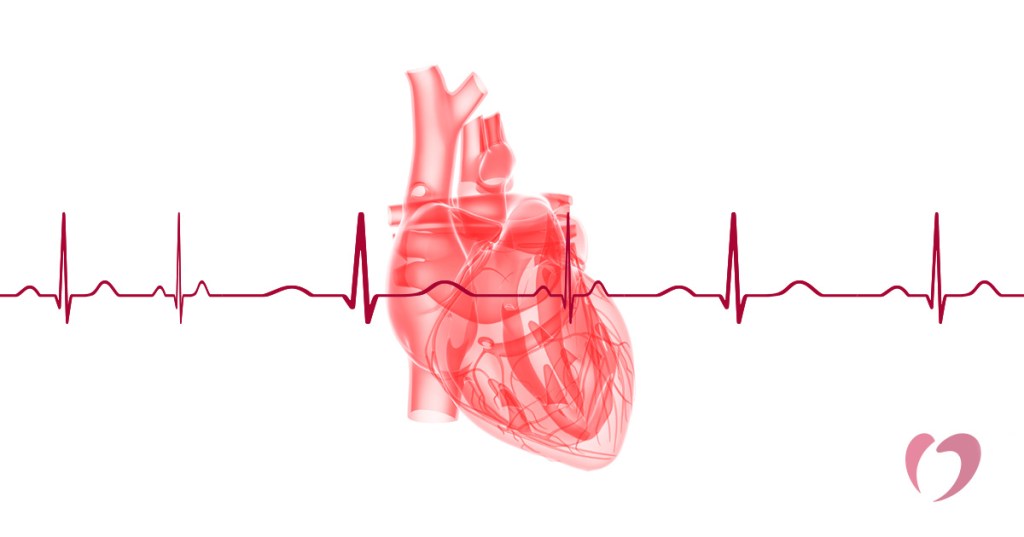
Imagine this. You are an individual with hereditary cardiac issues, perhaps in their mid 40’s experiencing the following symptoms: chest pain, dizziness, lightheadedness, confusion, rapid pulse, short of breath and overall just feeling weak [1]. You come into the emergency room, where after a while, you’re greeted by the doctor. They hear about your symptoms and ask for an EKG. “We’re gonna perform an EKG for you, are you familiar with this test?” You look at the doctor, now more confused than you already were feeling when you walked into the hospital. You shake your head and the doctor begins to explain. “The ECG, or the electrocardiogram, is essentially a test, and it allows us to see the electrical activity of your heart. We use it for different heart diagnoses but in this case, we just want to check for any heart damage, if your heart is beating rhythmically, and to check for the size of your heart chambers.” [2].
Of course, now that the doctor has listed 10 different things that they will be checking for, you begin to worry if your heart exhibits any of those possible damages, and is the reason why you are feeling the way you are. After all, heart disease is embedded in your genes. You wonder if you’ve officially reached the age where your body will constantly be in a state of frailty. The doctor notices, and calms you down. “I can understand this may all sound frightening, but of course, we just need to follow these procedures just to be safe. However, I assure you that the procedure is safe and we will walk you through the entire process and you will know exactly what to expect. Is that okay with you?” As a patient, the reassurance helped calm you down. You realized that this procedure was for your own best benefit and you proceeded to listen to how the test will be performed.
“First we will have you lie down. One of my residents will be doing the test on you, and they will start off by cleaning several areas on your body, including your arms, legs and chest [2]. They will then attach small patches on those areas of your body called electrodes. The patches are connected to a wire on a machine, which almost looks like a TV. Your heart produces electrical signals and these signal patterns can be detected on the screen as a bunch of wavy lines [2].” You wondered what your heart signals would produce – what wavy lines your EKG would have. “I will then analyze these signals,” the doctor continues, “I can understand that waiting for the results or having the test done can be frightening but our team is here to help you along the way. So, it’s important that you remain still, calm and relaxed during the test [2], so that we don’t make any misinterpretations! Do you have any questions?”. You sat on the hospital bed, only wishing to ask the doctor what could have happened to you, yet of course, you nor the doctor, nor the resident will get any answers, until this test is performed. As a patient, you have entrusted yourself to these healthcare professionals, and as scary as your gut may tell you to be, their training and knowledge will only save you, and for that, you knew your cooperation was needed. The doctor noticed you beginning to overthink again. “Once again, relaxation is key! The test is painless, and the electrode patches may feel cold when pressed on your body [2]. There are no risks to this test [2]. Finally, I’d like to ask you if you were on medication at the moment?” You answered, “No, at the moment no. I only take ibuprofen for pain”. The doctor replied, “Okay thank you. So with everything explained we’ll go ahead and get you prepared and start the test. Is that alright?” You felt more comfortable understanding the procedure and the reassurance of the procedure. You nodded your head and after the doctor smiled, they left. You thought to yourself, “I may be overwhelmed with all this technology in the hospitals, but I was reassured that I will be fine. Let the wavy lines and heart signals do their job.”
Author: Sumairaa Ahmed
References
- Mayo Foundation for Medical Education and Research. (2020, April 9). Electrocardiogram (ECG or EKG). Mayo Clinic. Retrieved January 29, 2022, from https://www.mayoclinic.org/tests-procedures/ekg/about/pac-20384983
- Electrocardiogram. Mount Sinai Health System. (n.d.). Retrieved January 29, 2022, from https://www.mountsinai.org/health-library/tests/electrocardiogram
 JP Stroke Foundation
Leave a comment